
Need Guidance on Radar Sensors or Security Scanners?

Tell us what you need, our experts will help you choose the right radar sensor or security scanner for your applications.

Contact Us

Why Choose Us
  • Why Choose Us
  • Why Choose Us
  • Why Choose Us
  • Why Choose Us
  • Core Competitive Edge
    We design and produce our own millimeter-wave chips, including 77–81GHz and 13/26GHz MMIC chips, as well as radar imaging processors, giving us full control over performance and innovation.
  • Core Team
    Our R&D team is led by Ph.D. experts from Tsinghua University with deep knowledge in RF circuit design, radar system algorithms, dedicated processor chips, automotive-grade SoC design, and high-frequency antenna technologies such as AiP (Antenna-in-Package) integration. We have R&D centers in Zhuhai, Beijing, and Hefei, with over 60% of our staff dedicated to research and development.
  • Product Accuracy (Radar)
    We focus on making radar sensors that are accurate, reliable, and built to meet the same standards as top international brands.

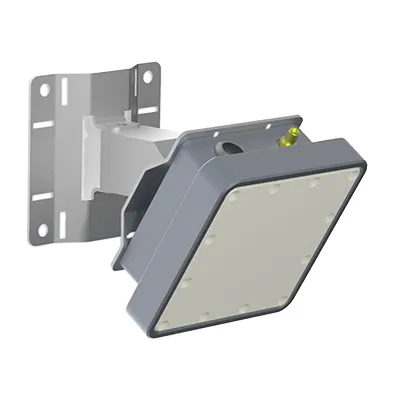
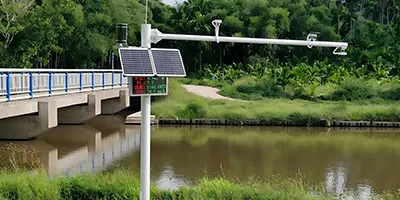
A 24 GHz planar microstrip radar combined with dedicated backend processing can extract surface-flow velocity with good stability. This type of sensor (RVM2400) performs well in open channels and natural river sections, where the water surface often changes due to debris, uneven flow or varying depth.

The sensor measures flow velocities from 0.05 to 30 m/s with an accuracy of ±1%. This range covers both slow and high-speed conditions, allowing the sensor to follow the rapid increases in water velocity that occur during flood season while keeping the output stable, even when the flow becomes turbulent.

FMCW millimeter-wave radar is a better option for monitoring flow velocity or flow rate without contact, as it takes measurements from above the water surface. Guided-wave radars use a probe that needs to be in direct contact with the material, which means it can't measure speed or flow from a distance. FMCW radars, on the other hand, can accurately detect water movement using Doppler or time-shift analysis, providing stable and reliable results.

For river applications, the sampling frequency should match the expected water speed, typically 5–10 Hz, with a higher rate when the flow increases. Automatic gain control reduces reflections caused by floating debris and surface waves. Setting the Doppler filter to a narrow bandwidth helps the radar stay focused on the actual flow movement rather than surface noise.

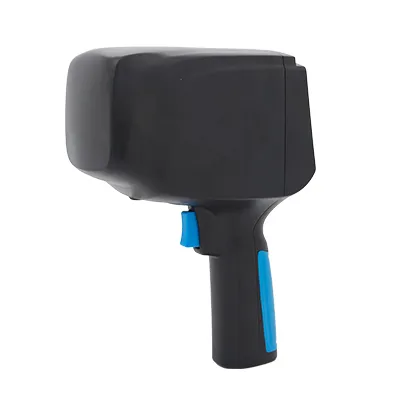
Handheld surface velocity radars use K-band non-contact measurement, so corrosion, sediment and suspended solids do not affect the signal. They can operate in rivers, sewage channels, muddy environments, and coastal areas, which is suitable for regular monitoring as well as rapid checks during flood-season or emergency conditions.

Handheld meters weigh 470 g and measures 153 × 85 × 220 mm, so they are easy to carry and use with one hand in field work. They have a custom LCD screen that shows instantaneous and average flow velocity clearly, allowing quick operation without complicated setup.