Need Help Finding the Right Radar Sensor?

We’ll guide you to the right option for your project.

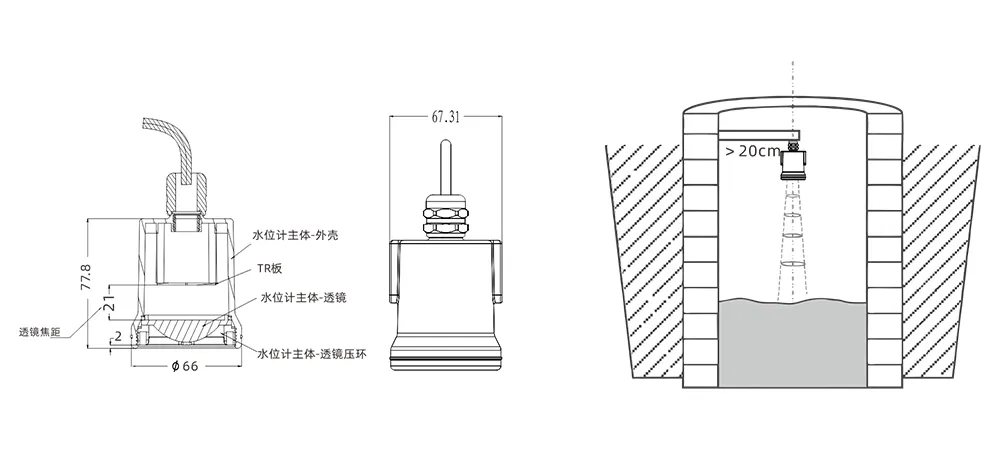
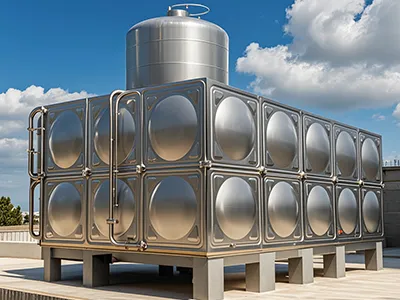
FMCW millimeter-wave radars work without touching the medium, so there’s no need to install a guided-wave probe inside every tank. Multi-tank setups become much simpler to install and maintain, especially when several tanks run in parallel. The high-frequency signal, typically 76–81 GHz, remains stable even when the surface has foam, swirling liquid, or strong agitation. Since the signal isn’t affected by these disturbances, the radars keep the level readings steady and accurate, even in challenging working conditions.

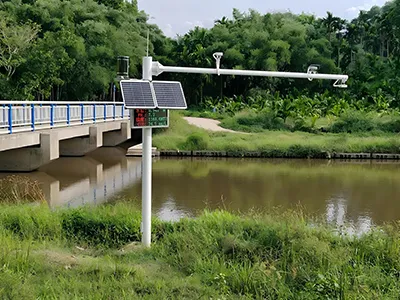
FMCW millimeter-wave radar is generally the most reliable choice outdoors. It provides non-contact measurement, carries an IP68 protection rating, and operates safely from -40°C to 85°C. Weather changes, floating debris, and water quality variations don’t impact the reading. Its millimeter-level accuracy is suitable for long-term hydrological monitoring, and features like anti-condensation and anti-buildup help prevent maintenance issues. Because nothing touches the water and the antenna stays clean, the radar can run for years with minimal attention.

In river channels or monitoring networks with several measuring points, the radar needs to be placed where the surface is open and stable, away from vortexes, pillars, or objects that disrupt the beam. The radar should face the water vertically or with a small angle, up to about 10°, to cover the full range of expected water-level changes. The mounting height must stay at least 0.5 m above the highest recorded water level, while ensuring that the lowest water level is still within the radar’s effective measuring range. Keeping the radar neither too close nor too far from the surface prevents errors and keeps the data reliable.