FAQs
Radar Sensors
Can millimeter-wave radar level transmitters support automated monitoring and handle complex on-site conditions? What certifications do they have?
Can millimeter-wave radar level transmitters support automated monitoring and handle complex on-site conditions? What certifications do they have?
Yes. They’re made to work with automated systems and can measure material levels in real time, staying accurate even in tough industrial environments. Each device is certified with CE, HART, ATEX explosion-proof, and SIL2 explosion-proof standards.
What types of materials can radar level transmitters measure?
What types of materials can radar level transmitters measure?
They can measure both liquids and solids, from powders and grains to thicker materials such as slurries or pastes. Because of their versatility, they’re often used in industries such as petrochemical, food processing, and building materials.
Do environmental factors such as dust or temperature affect measurement accuracy?
Do environmental factors such as dust or temperature affect measurement accuracy?
Millimeter-wave radar sensors can still measure accurately even when the environment isn’t ideal. They can penetrate dust, steam, and other obstacles, keeping the readings stable despite changes in humidity or temperature.
When should millimeter-wave radar level transmitters be used?
When should millimeter-wave radar level transmitters be used?
Millimeter-wave radar level transmitters are used for precise, non-contact level measurement, even in tough conditions like dusty areas, high temperatures, humidity, or corrosive environments. They’re designed to stay precise and reliable, even when operating in tough or changing conditions.
What installation options are available for radar level transmitters (e.g., LM78 series)?
What installation options are available for radar level transmitters (e.g., LM78 series)?
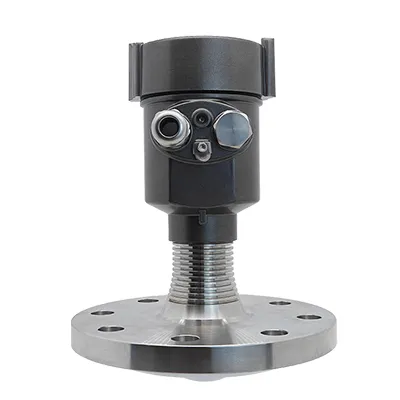
They can be installed in several ways depending on the setup, through threaded or flange connections of different sizes, or with clamp and ring mounts when needed. It’s a flexible design that makes installation easier and allows the transmitters to adapt well to different setups, like tanks, pipelines, or process systems.
How are the transmitters protected when used with corrosive media?
How are the transmitters protected when used with corrosive media?
Non-contacting radar level transmitters can be equipped with antennas made of 316L stainless steel with PTFE coating, fully corrosion-resistant PTFE, or PP material, ensuring safe and stable operation in chemical and pharmaceutical environments.
How can the standard 80GHz radar module be operated, and can the interface be customized for different industries?
How can the standard 80GHz radar module be operated, and can the interface be customized for different industries?
It can be operated through a 128×64 dot-matrix display with four control keys or by using PC software. The 80GHz radar measurement module also supports multiple languages and customizable display layouts, so it can be easily adapted to different operating preferences and industry requirements.
What can the compact radar level transmitter measure in water conservancy and municipal systems?
What can the compact radar level transmitter measure in water conservancy and municipal systems?
This radar is made with a PPO plastic housing that’s lightweight and easy to install. It’s mainly used to measure river and canal water levels in water management projects, and to monitor manhole levels in city drainage systems. It works well in normal conditions from -40°C to 85°C and can handle humidity and slightly corrosive environments without affecting accuracy.
Can radar level transmitters for continuous measurement provide stable readings in tanks with agitation, heavy dust, or foam?
Can radar level transmitters for continuous measurement provide stable readings in tanks with agitation, heavy dust, or foam?
Yes. These level transmitters use millimeter-wave chips and waveguide antennas with a narrow beam angle of 3° or 8°, providing strong resistance to interference. They can measure accurately even when there’s foam, vapor, or steam above crude oil. The readings stay stable in harsh conditions too, such as in cement plants with a lot of dust or in chemical tanks where the material is constantly being stirred.
Can radar level transmitters be used with auxiliary devices such as a tank-side indicator?
Can radar level transmitters be used with auxiliary devices such as a tank-side indicator?
Safety-certified radar sensors for continuous level measurement can be paired with the GPB80 industrial tank-side indicator, which displays real-time level data directly beside the tank. This makes on-site monitoring easier and is particularly useful for facilities that manage multiple storage tanks in industries like chemicals, oil, and energy.
Which industries are the high-temperature and standard radar measurement modules suitable for?
Which industries are the high-temperature and standard radar measurement modules suitable for?
The high-temperature modules operate from −40 °C to +200 °C and are mainly used in the steel and energy industries, where they measure molten metals and high-temperature combustion materials. The standard modules work within −40 °C to +85 °C and are suitable for applications in the food and pharmaceutical sectors, where they monitor the level of liquids or solid raw materials under normal conditions.
What advantages do guided wave radar level transmitters offer in high-temperature, high-pressure, or corrosive environments?
What advantages do guided wave radar level transmitters offer in high-temperature, high-pressure, or corrosive environments?
Guided wave radar level transmitters can be equipped with metal rods or cables designed to withstand high temperatures and pressure, as well as corrosion-resistant probes made from materials like 316L stainless steel or Hastelloy. The measuring signal travels directly through the waveguide, so it isn’t affected by steam or corrosive gases in the environment. This design keeps the measurement stable and accurate even in demanding environments, where high temperatures, pressure, or corrosive gases would normally affect other types of sensors.
In chemical storage tanks where foam or vapor often forms on the liquid surface, which is more stable, guided wave radar or FMCW radar?
In chemical storage tanks where foam or vapor often forms on the liquid surface, which is more stable, guided wave radar or FMCW radar?
Guided wave radar transmitters provide more stable readings because the signal travels directly through the probe that’s in contact with the medium. Foam or vapor doesn’t interfere with the measurement, so the readings stay consistent. FMCW (Frequency Modulated Continuous Wave) radars don’t make direct contact with the medium, so their signal can be affected by foam or steam. When this happens, the readings may become slightly less stable or show small variations.
Does gas or high-viscosity liquid affect the measurement accuracy of guided wave radar transmitters?
Does gas or high-viscosity liquid affect the measurement accuracy of guided wave radar transmitters?
In liquids that contain gas, guided wave radar transmitters stay accurate thanks to automatic compensation that adjusts for signal interference. In thicker or highly viscous liquids, material can build up on the probe over time, which may affect the measurement accuracy. To keep the readings consistent and reliable, the probe should be cleaned regularly, and the sensor needs to be properly maintained to ensure stable performance in the long run.
Why are FMCW millimeter-wave radars a good choice for multi-tank setups or tanks with mixing?
Why are FMCW millimeter-wave radars a good choice for multi-tank setups or tanks with mixing?
FMCW millimeter-wave radars work without touching the medium, so there’s no need to install a guided-wave probe inside every tank. Multi-tank setups become much simpler to install and maintain, especially when several tanks run in parallel. The high-frequency signal, typically 76–81 GHz, remains stable even when the surface has foam, swirling liquid, or strong agitation. Since the signal isn’t affected by these disturbances, the radars keep the level readings steady and accurate, even in challenging working conditions.
Which type of radar performs best for outdoor water-level monitoring in rivers, reservoirs, or wastewater plants?
Which type of radar performs best for outdoor water-level monitoring in rivers, reservoirs, or wastewater plants?
FMCW millimeter-wave radar is generally the most reliable choice outdoors. It provides non-contact measurement, carries an IP68 protection rating, and operates safely from -40°C to 85°C. Weather changes, floating debris, and water quality variations don’t impact the reading. Its millimeter-level accuracy is suitable for long-term hydrological monitoring, and features like anti-condensation and anti-buildup help prevent maintenance issues. Because nothing touches the water and the antenna stays clean, the radar can run for years with minimal attention.
How should the installation point and height be selected for multi-point water-level monitoring?
How should the installation point and height be selected for multi-point water-level monitoring?
In river channels or monitoring networks with several measuring points, the radar needs to be placed where the surface is open and stable, away from vortexes, pillars, or objects that disrupt the beam. The radar should face the water vertically or with a small angle, up to about 10°, to cover the full range of expected water-level changes. The mounting height must stay at least 0.5 m above the highest recorded water level, while ensuring that the lowest water level is still within the radar’s effective measuring range. Keeping the radar neither too close nor too far from the surface prevents errors and keeps the data reliable.
Is a 24 GHz flow-velocity radar sensor (RVM2400) suitable for monitoring water flow in open channels and natural rivers?
Is a 24 GHz flow-velocity radar sensor (RVM2400) suitable for monitoring water flow in open channels and natural rivers?
A 24 GHz planar microstrip radar combined with dedicated backend processing can extract surface-flow velocity with good stability. This type of sensor (RVM2400) performs well in open channels and natural river sections, where the water surface often changes due to debris, uneven flow or varying depth.
What measuring range and accuracy does the sensor provide, and can it handle high flow speeds during flood season?
What measuring range and accuracy does the sensor provide, and can it handle high flow speeds during flood season?
The sensor measures flow velocities from 0.05 to 30 m/s with an accuracy of ±1%. This range covers both slow and high-speed conditions, allowing the sensor to follow the rapid increases in water velocity that occur during flood season while keeping the output stable, even when the flow becomes turbulent.
For non-contact flow-velocity or flow-rate monitoring, is FMCW millimeter-wave radar a better option than guided-wave radar?
For non-contact flow-velocity or flow-rate monitoring, is FMCW millimeter-wave radar a better option than guided-wave radar?
FMCW millimeter-wave radar is a better option for monitoring flow velocity or flow rate without contact, as it takes measurements from above the water surface. Guided-wave radars use a probe that needs to be in direct contact with the material, which means it can't measure speed or flow from a distance. FMCW radars, on the other hand, can accurately detect water movement using Doppler or time-shift analysis, providing stable and reliable results.
How should radar settings be modified to ensure reliable flow velocity measurements in rivers?
How should radar settings be modified to ensure reliable flow velocity measurements in rivers?
For river applications, the sampling frequency should match the expected water speed, typically 5–10 Hz, with a higher rate when the flow increases. Automatic gain control reduces reflections caused by floating debris and surface waves. Setting the Doppler filter to a narrow bandwidth helps the radar stay focused on the actual flow movement rather than surface noise.
What measurement method does the handheld surface velocity radar use, and which environments can it operate in?
What measurement method does the handheld surface velocity radar use, and which environments can it operate in?
Handheld surface velocity radars use K-band non-contact measurement, so corrosion, sediment and suspended solids do not affect the signal. They can operate in rivers, sewage channels, muddy environments, and coastal areas, which is suitable for regular monitoring as well as rapid checks during flood-season or emergency conditions.
What portability features does the handheld surface velocity radars offer, and how easy is to operate them?
What portability features does the handheld surface velocity radars offer, and how easy is to operate them?
Handheld meters weigh 470 g and measures 153 × 85 × 220 mm, so they are easy to carry and use with one hand in field work. They have a custom LCD screen that shows instantaneous and average flow velocity clearly, allowing quick operation without complicated setup.
What parameters can radar flow sensors measure, and how do they work?
What parameters can radar flow sensors measure, and how do they work?
Radar flow sensors use a non-contact dual-radar setup to measure surface-flow velocity and water level at the same time. FMCW range detection handles the distance measurement, and the wave-suppression processing helps reduce the effect of surface movement. Both values are then used in a hydraulic model to get the final flow-rate result in a clear and consistent way.
How do radar flow sensors maintain accuracy in water with high sediment content?
How do radar flow sensors maintain accuracy in water with high sediment content?
The dual-radar non-contact setup allows the sensors to measure velocity and water level without being affected directly by sediment. FMCW range detection and the built-in wave-suppression program help minimize the impact of surface disturbance caused by sediment, keeping distance accuracy within ±1 mm and velocity accuracy within ±1%.
Can the sensors be adjusted to meet the needs of specific field conditions?
Can the sensors be adjusted to meet the needs of specific field conditions?
Yes. Parameters and functions can be adjusted to match the needs of unique open-channel, pipeline or field monitoring setups, allowing the sensors to fit specialized application scenarios.
Millimeter Wave Security Scanners
Is the millimeter-wave scanner harmful? Do the waves pass through the body?
Is the millimeter-wave scanner harmful? Do the waves pass through the body?
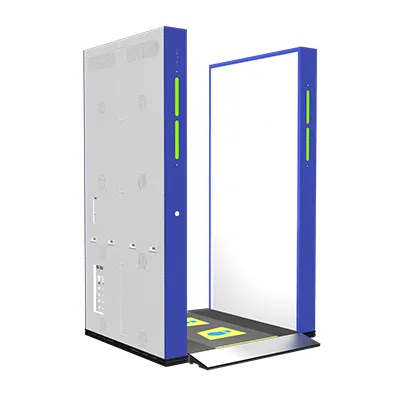
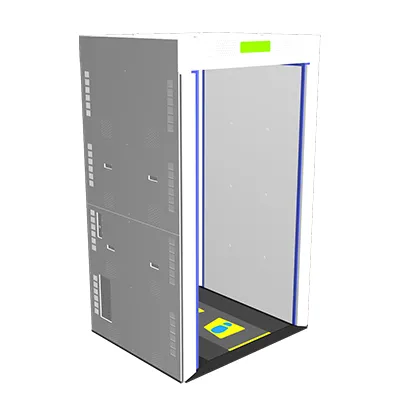
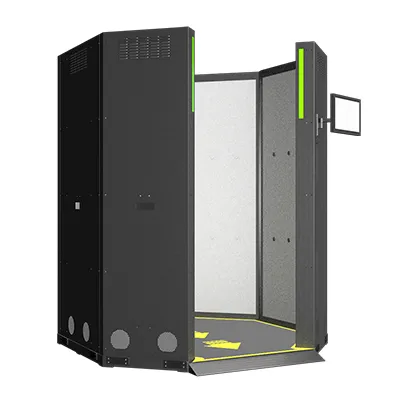
Walk-through security scanners use millimeter-wave signals, similar in nature to mobile-phone and Wi-Fi signals, they are completely different from X-ray or CT radiation. These waves don’t pass through the skin; they reflect off the surface, so they don’t cause any damage. Each screening lasts only 0.1 seconds, and the power level is about one-thousandth of a phone call. These security scanners meet the requirements of GB 8702-2014 and have been tested by the National Institute of Metrology, so passengers can use it safely.
Can people with pacemakers, stents or metal implants use the walk-through security scanners?
Can people with pacemakers, stents or metal implants use the walk-through security scanners?
Yes. The security scanners are safe for everyone, including people with pacemakers, implants, metal plates, pregnant women and children. The technology does not interfere with medical devices or affect the body.
Can children go through the scanner?
Can children go through the scanner?
Children who are 1.2 meters or taller can be screened without issues, since they can follow the basic posture required. Very young children usually have trouble staying still, so this type of check is not recommended for them.
Can the scanner pick up items on someone’s head or in their hands?
Can the scanner pick up items on someone’s head or in their hands?
It can detect things worn on the head. For the hands, passengers open their palms during the check, so security staff can easily see what they’re holding. Because of that, hand-item detection isn’t turned on at the moment, but it can be added if a project really needs it.
Do passengers need to take off their jackets?
Do passengers need to take off their jackets?
Yes, they do. Thick coats or multiple layers can make the scan less clear, and small items might not show properly. Taking the jacket off helps the check go faster and avoids having to repeat the scan.
How long does the security scanner take to start up? Do we need to turn it off every day?
How long does the security scanner take to start up? Do we need to turn it off every day?
When the human body security scanner is powered on, it only needs five minutes to get fully ready. After that, it can work all day without any problem, and you don’t need to turn it off after every shift. The only thing we recommend is giving it one full restart each week, just so the screening system refreshes properly and keeps running smoothly in the long term.
Do the millimeter wave body security scanners need calibration after running for several hours?
Do the millimeter wave body security scanners need calibration after running for several hours?
Human body scanners (without top) use a fully electronic 2D MIMO setup with no moving parts, so they stay stable throughout the day. They don’t need recalibration at any point, even during long hours of continuous use. Since the security scanner doesn't have moving parts, there’s nothing inside that can loosen or wear down while it’s running. That’s why the performance stays steady all day and staff don’t need to stop and adjust anything during use.
Does the AI detection model get updated regularly?
Does the AI detection model get updated regularly?
The millimeter wave body scanner uses the same AI model that was tested and approved at A3 level by the CAAC, which is the highest grade in their system. Since that model already meets strict requirements, it doesn’t get updated on a regular schedule. If a project requires features that aren’t included by default, like detecting specific items or adding extra screening steps, we can discuss customized options. The team can adjust certain functions to match the needs of the site, as long as those changes stay within the approved safety and performance standards.